Popular

Showing posts with label Series. Show all posts

Thursday, November 7, 2013

Tsubasa Chronicle Cartoon Manga Animation Series


Tsubasa Reservoir Chronicle is a shōnen manga series written and illustrated by the manga artist group Clamp. It takes place in the same fictional universe as many of Clamp's other manga series, most notably xxxHolic. The plot follows how Sakura, the princess of the Kingdom of Clow, loses her soul and how Syaoran, a young archaeologist who is her childhood friend, goes on a quest to save her. Dimensional Witch Yūko Ichihara instructs him to go with two people, Kurogane and Fai D. Flowright. They search for Sakura's memories, which were scattered in various worlds in the form as feathers, as gathering them will help save her soul. Tsubasa was conceived when four Clamp artists wanted to create a manga series that connected all their previous works. They took the designs for the main protagonists from their earlier manga called Cardcaptor Sakura.

It was serialized in the Kodansha publication Weekly Shōnen Magazine from May 2003 until October 2009, and was collected in twenty-eight tankōbon volumes. The manga was adapted into an anime series, Tsubasa Chronicle, animated by Bee Train, which aired 52 episodes over two seasons during 2005 and 2006. Production I.G released an interlude film between the first two seasons titled The Princess in the Birdcage Kingdom, as well as five original video animations (OVAs) between November 2007 and May 2009, which acted as a sequel to the second season. Various video games and drama CDs based on the series have been released. The manga was licensed for English language release by Del Rey Manga, who has released all of its volumes since April 27, 2004. Funimation Entertainment licensed the anime for English release. They published all the TV episodes in DVD volumes as well as the film. The OVAs of Tsubasa were released in North America in January 2011.

The series has been well received by Japanese and English readers, and it reached high positions on various best-seller lists; the series has sold over twenty million manga volumes in Japan as of September 2009. Both the manga and anime have had positive response from critics, who praised its connections to previous works and its artwork. The plot twists in later parts of the story have been generally praised for how they affect the overall plot as well as for being surprising. However, they have been criticized for being confusing.

Tsubasa explores the fragility of human relationships through Sakura losing all of her memories involving Syaoran. Despite this tragedy, Syaoran forms new bonds across his journey. Furthermore, Sakura once again develops feelings for Syaoran who at the same time starts falling for her again. The development of the characters' relationship demostrates how while modern society depends on already existing one, a severed one can be reformed if people have the will.

Another theme in the series is the use of identical people as a result of the characters travelling to parallel worlds where they find alternative versions of people they met before. Despite sharing the same physical appearances, these identical versions have been through different experiences earning their own identities. Syaoran also has his own doppeldanger commonly referred as "The Other Syaoran" who at the same time shares the same identity as the protagonist from xxxHolic, Kimihiro Watanuki. Across the series, these character are developed and choose their own paths to earn their own identites.

Saturday, October 12, 2013

Aqua Teen Hunger Force Cartoon Animated Funny


The non sequitur humor of Aqua Teen Hunger Force will surely appeal to its built-in fanbase, but for the uninitiated, the premise wears thin. Aqua Teen Hunger Force (also known by various alternative titles) is an American animated television series on Cartoon Network's late night programming block, Adult Swim. The series made its official debut on September 9, 2001 on Adult swim; after the pilot episode was aired as a special sneak peek on Cartoon Network on December 30, 2000. The show is about the surreal adventures of three anthropomorphic fast food items: Master Shake, Frylock and Meatwad, and their human nextdoor neighbor, Carl Brutananadilewski.

Aqua Teen Hunger Force is one of the spin-offs of the show Space Ghost Coast to Coast, and as of 2013, the longest running original series on Adult Swim, as well as one of the top 10 longest-running American animated television series of all time. Each episode is written and directed by series creators Dave Willis and Matt Maiellaro, who also provide several voices. As of 2011 each season is given a different alternative title accompanied by a different opening sequence as a running gag by the creators. Aqua Teen Hunger Force Colon Movie Film for Theaters, a film adaption of the series was released in theaters on April 13, 2007, marking the first time an Adult Swim series has been adapted into a movie.

There have been a total of 130 episodes during the show's nine seasons. An episode titled "Boston" was scheduled to air during the fifth season, but was pulled to avoid further controversy surrounding the 2007 Boston bomb scare, and has never aired or been released to the public in any format. Since its release, the series has developed a cult following, and its popularity resulted in three different spin-offs: Spacecataz, Carl's Stone Cold Lock of the Century of the Week, and Soul Quest Overdrive. Maiellaro has stated that there are no plans to end the series at any time in the foreseeable future. The series also airs in syndication in other countries and has been released on various DVD sets and other forms of home media, including on demand streaming of the first season on Netflix.

The main cast of the series consists of Dana Snyder as Master Shake, Carey Means as Frylock and series co-creator Dave Willis as both Meatwad and Carl. In addition to the main cast series co-creator Matt Maiellaro voices Err and Cybernetic Ghost of Christmas Past from the Future. Members of the main cast and Matt Maiellaro also voice several minor and one-time characters in addition to their primary roles.

Voice over artist George Lowe, has made several appearances throughout the series run. Lowe had previously started as Space Ghost in Space Ghost Coast to Coast and the original incarnation of Cartoon Planet, several cast and crew members of which had moved on to work on Aqua Teen Hunger Force. Lowe made his first appearance in Aqua Teen Hunger Force in the season one episode "Mail-order bride" and would go on to make several other cameos since. Lowe had a prominent appearance as himself in the season four episode "Antenna", and reprised his role as Space Ghost for a quick appearance in Aqua Teen Hunger Force Colon Movie Film for Theaters. Lowe was later considered a member of the main cast in 2011 during Aqua Unit Patrol Squad 1, where he announced the title for each episode and continued to make cameos. Lowe later made another prominent appearance in the Aqua Something You Know Whatever episode "Rocket Horse and Jet Chicken".

Series animator C. Martin Croker, known for his interpretation of Zorak in various shows and specials provided the voices of both Dr. Weird and Steve during the cold openings for the first two seasons and "Allen Part 1". Croker also voiced several birds in the season seven episode "Eggball".Andy Merrill has portrayed Oglethorpe alongside Mike Schatz as Emory in several episodes. Merrill is also well known for his interpretation of Brak in several shows and specials and also provided the voice of Merle in "Escape from Leprechaupolis" and "The Last One". mc chris, who has a history of voicing characters on Adult Swim programs has provided the voice of MC Pee Pants in several episodes. Chris also provided the voice of Carl at eight years old in "Cybernetic Ghost of Christmas Past from the Future" and later returned for a musical role in the season seven episode "One Hundred", after a long absence from appearing in the series. Tommy Blacha entered into the recurring in cast in the season four episode "Dickesode", were his character Wongburger was introduced. With the exception of Tommy Blacha, the entire recurring cast reprised their roles for the 2007 film Aqua Teen Hunger Force Colon Movie Film for Theaters.

Monday, September 9, 2013

Bart Simpson Animated Television Series Cartoon Funny


Bartholomew JoJo "Bart" Simpson is a fictional main character in the animated television series The Simpsons and part of the Simpson family. He is voiced by actress Nancy Cartwright and first appeared on television in The Tracey Ullman Show short "Good Night" on April 19, 1987. Bart was created and designed by cartoonist Matt Groening while he was waiting in the lobby of James L. Brooks' office. Groening had been called to pitch a series of shorts based on Life in Hell but instead decided to create a new set of characters. While the rest of the characters were named after Groening's family members, Bart's name was an anagram of the word brat. After appearing on The Tracey Ullman Show for three years, the Simpson family received its own series on Fox, which debuted December 17, 1989.

At ten years old, Bart is the eldest child and only son of Homer and Marge, and the brother of Lisa and Maggie. Bart's most prominent character traits are his mischievousness, rebelliousness and disrespect for authority. He has appeared in other media relating to The Simpsons, including video games, The Simpsons Movie, The Simpsons Ride, commercials, and comic books; he has also inspired an entire line of merchandise. In casting, Nancy Cartwright originally planned to audition for the role of Lisa, while Yeardley Smith tried out for Bart. Smith's voice was too high for a boy, so she was given the role of Lisa. Cartwright found that Lisa was not interesting at the time, so instead auditioned for Bart, which she thought was a better role. Hallmarks of the character include his chalkboard gags in the opening sequence; his prank calls to Moe the bartender; and his catchphrases "Eat my shorts", "¡Ay, caramba!", and "Don't have a cow, man!"

The entire Simpson family was designed so that they would be recognizable in silhouette. The family was crudely drawn, because Groening had submitted basic sketches to the animators, assuming they would clean them up; instead, they just traced over his drawings. Bart's original design, which appeared in the first shorts, had spikier hair, and the spikes were of different lengths. The number was later limited to nine spikes, all of the same size. At the time Groening was primarily drawing in black and "not thinking that [Bart] would eventually be drawn in color" gave him spikes which appear to be an extension of his head. The features of Bart's character design are generally not used in other characters; for example, no other characters in current episodes have Bart's spiky hairline, although several background characters in the first few seasons shared the trait.

The basic rectangular shape of Bart's head is described by director Mark Kirkland as a coffee can. Homer's head is also rectangular (with a dome on top), while spheres are used for Marge, Lisa, and Maggie. Different animators have different methods of drawing Bart. Former director Jeffrey Lynch starts off with a box, then adds the eyes, then the mouth, then the hair spikes, ear, and then the rest of the body. Matt Groening normally starts with the eyes, then the nose, and the rest of the outline of Bart's head. Many of the animators have trouble drawing Bart's spikes evenly; one trick they use is to draw one on the right, one on the left, one in the middle, then continue to add one in the middle of the blank space until there are nine. Originally, whenever Bart was to be drawn from an angle looking down so the top of his head was seen, Groening wanted there to be spikes along the outline of his head, and in the middle as well. Instead, Wes Archer and David Silverman drew him so that there was an outline of the spikes, then just a smooth patch in the middle because "it worked graphically." In "The Blue and the Gray", Bart (along with Lisa and Maggie) finally questions why his hair has no visible border to separate head from hair.

In the season seven (1995) episode "Treehouse of Horror VI", Bart (along with Homer) was computer animated into a three dimensional character for the first time for the "Homer3" segment of the episode. The computer animation directors was provided by Pacific Data Images. While designing the 3D model of the character, the animators did not know how they would show Bart's hair. They realized that there were vinyl Bart dolls in production and purchased one to use as a model.

Saturday, September 7, 2013

Barney & Friends American Children's Television Cartoon Series

Barney & Friends is an American children's television series aimed at children from ages 2 to 5. The series, which first aired on April 6, 1992, features the title character Barney, a purple anthropomorphic Tyrannosaurus rex who conveys educational messages through songs and small dance routines with a friendly, optimistic attitude.

The series opens with the theme song (over clips from various episodes) and the title card before it dissolves into the school. The children are seen doing an activity, occasionally relating to the episode's topic. The children imagine something and Barney comes to life from a plush doll, transforming into the "real" Barney, how he appears to the children while they're imagining.


Here, the main plot of the episode takes place. Barney and the children learn about the main topic of the episode, with Baby Bop, B.J., or Riff appearing during the episode and numerous songs themed relating to the subject featured in the series. The roles of Baby Bop, B.J., and Riff have grown larger in later seasons and later episodes venture outside of the school to other places within the neighborhood and to other countries around the world in Season 13.

Barney concludes with "I Love You" before he dissolves back into his original stuffed form and winks to the audience. After the children discuss a bit about what they had learned, the sequence cuts to Barney Says where Barney, who is off-screen, narrates what he and his friends had done that day, along with still snapshots from the episode. Then Barney, himself, signs off before the credits roll. In Seasons 3-8, and 12, he later appeared on-screen by saying, "And remember, I love you," and waves goodbye.

If you clap your hands
And stamp your feet,
You've started making music 'cause
You've started a beat,
Maybe play a kazoo,
It's so much fun,
Music is for everyone!

Music is great,
And it's everywhere,
It'll make you smile
As it fills the air,
You can make music,
Yes, it's lots of fun,
Music is for everyone!

Blow into a trumpet
Or a slide trombone,
Maybe play a tuba
Or a sousaphone,
You could play the cymbals
Or a big bass drum
Music is for everyone!

Music is great,
And it's everywhere,
It'll make you smile
As it fills the air,
You can make music,
Yes, it's lots of fun,
Music is for everyone!

Music is great,
And it's everywhere,
It'll make you smile
As it fills the air,
You can make music,
Yes, it's lots of fun,
Music is for everyone!

Friday, August 10, 2012

Thomas & Friends Cartoon Animation Series


Thomas & Friends  the Tank Engine & Friends until 2002 is a British children's television series, which had its first broadcast on the ITV network on 4 September 1984. It is based on The Railway Series of books by the Reverend Wilbert Awdry and his son, Christopher Awdry. These books deal with the adventures of a group of anthropomorphised locomotives and road vehicles who live on the fictional Island of Sodor. The books were based on stories Wilbert told to entertain his son, Christopher, during his recovery from measles. From Series one to four, many of the stories are based on events from Awdry's personal experience.

The series started production in 1983 by Britt Allcroft Productions, Clearwater Features Ltd David Mitton and Robert D. Cardona's company and the ITV company Central Independent Television. The series was originally shot and produced with live action models at the Clearwater in house studio in Battersea London, Series 1, then relocating to Shepperton Studios, Middlesex, southwest of London for subsequent Series'. The use of moving models was seen at the time of the show's conception as an effective method of animating the stories. Locomotives and other vehicles were operated by radio, while humans and animals were static figures. Stop-motion was occasionally employed for instances in which a human or animal character would move. Hand-drawn animation was used in Series 3 to create bees.

The original live action models were filmed on an extensive model railway layout built at the studios. The models were built to the 1:32 scale, known in model railway circles as "Gauge 1". The locomotives used chassis made by Märklin with specially made bodies. Along with the moving-eye and eyelid mechanisms and clay faces, these bodies also included smoke generators. Coaches and trucks were made using Tenmille kits. Later models were constructed entirely from scratch. Some of the models from the sister television series Tugs were reused in later episodes of the series.

Mike O'Donnell and Junior Campbell composed the show's original main title theme, incidental music and songs, (see List of Thomas & Friends songs), which were used for Series 1 to 7 comprising 182 episodes between 1984 and 2003.

In 2004, Robert Hartshorne took O'Donnell and Campbell's place as composer, while Ed Welch became the show's songwriter from Series 8 to The Great Discovery, and Welch left after The Great Discovery and Hartshorne took his place as songwriter from Series 12 and onwards. Peter Hartshorne joined Robert Hartshorne as composer and songwriter in 2011, starting with Day of the Diesels.

Sunday, July 3, 2011

Vampire Hunter Manga Anime Series


Vampire Hunter Manga Anime Series
A vampire hunter or vampire slayer is a character in folklore and works of fiction, such as books, films, and video games, who specializes in finding and destroying vampires, and sometimes other supernatural creatures. A vampire hunter is usually described as having extensive knowledge of vampires and other monstrous creatures, including their powers and weaknesses, and uses this knowledge to effectively combat them. In many works, vampire hunters are simply humans with more than average knowledge about the occult, while in others they are themselves supernatural beings, having superhuman abilities.

The vampire hunter has found new popularity in modern fiction and popular culture. The most widely known example of a vampire hunter is Abraham Van Helsing of the novel Dracula and in other works of fiction adapting or modifying that work. Other more recent figures include Buffy "the Vampire Slayer" Summers from the television show and film of the same name. Buffy's spin-off series Angel is also focused on a vampire hunter, the titular star, Angel "the World's Champion," a vampire himself, is often portrayed battling vampires. Vampire hunters have also appeared in video games, such as BloodRayne.

Friday, June 3, 2011

Birdy the Mighty Cartoon Anime Series


Birdy the Mighty Cartoon Anime Series
Birdy the Mighty is a manga by Masami Yuki, who is best known for producing the long-running series Patlabor. His initial work on the series was quickly abandoned, but it was made into an anime, which was produced and, on the last episode, scripted by Yoshiaki Kawajiri, who is known for anime titles such as Vampire Hunter D, and Ninja Scroll. The character designer and animation director for the series was Kumiko Takahashi.

A Federation police officer, she arrives on Earth in pursuit of alien criminals who are using the planet as a refuge. During one of her missions, she accidentally kills Tsutomu and has to fuse with him in order to keep him alive. In the 2008 anime, her false identity on Earth is rising Japanese idol Shion Arita. She is accompanied by a robot named Tuto. Birdy is an Altairian, a human-like alien, possibly from a planet orbiting the star Altair. More specifically, Birdy is an Ixioran Altairian, a bio-engineered supersoldier bred for combat.

Zenki Japanese Manga Anime Series


Zenki Japanese Manga Anime Series
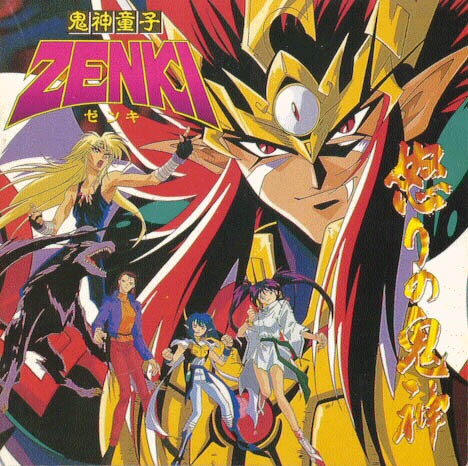
Zenki is a Japanese manga series written by Kikuhide Tani and illustrated by Yoshihiro Kuroiwa. It was serealized in the Shueisha publication, Monthly Shōnen Jump from 1992 to 1996. Zenki was adapted into a fifty-one episode anime television series in 1995. Zenki appears to be a child who transforms into his true and powerful demon form. In the early episodes, Chiaki needed to use the bracelet to transform Zenki into his true form. In the final episode, however, Zenki's anger allows him to transform into his true self.

With the help of the bracelet and Goki, another powerful demon spirit, Chiaki is able to transform Zenki into a super powerful demon spirit. The bracelet, however, is no longer necessary when Chiaki attains all of her full powers in the final episode of Zenki.

Monday, April 25, 2011

Suneo in Doraemon Manga Series


Suneo in Doraemon Manga Series

Suneo, another enemy of Nobita. Suneo is the best friend of Jyian. Together, they both beat up Nobita. The only reason that Suneo sticks with Jyian is because he know that Jyian would beat him up too. Suneo comes from a rich family. The richest in the Doraemon saga. He is very spoiled, and always making fun of Nobita's cheap toys. In all the cartoons he is pretty mean, except in the movies, which sometimes he acts pretty brave. He is very smart, but not in school work.

Is a Japanese manga series created by Fujiko F. Fujio the pen name of Hiroshi Fujimoto which later became an anime series and an Asian franchise. The series is about an earless robotic cat named Doraemon, who travels back in time from the 22nd century to aid a schoolboy.
Related Posts with Thumbnails